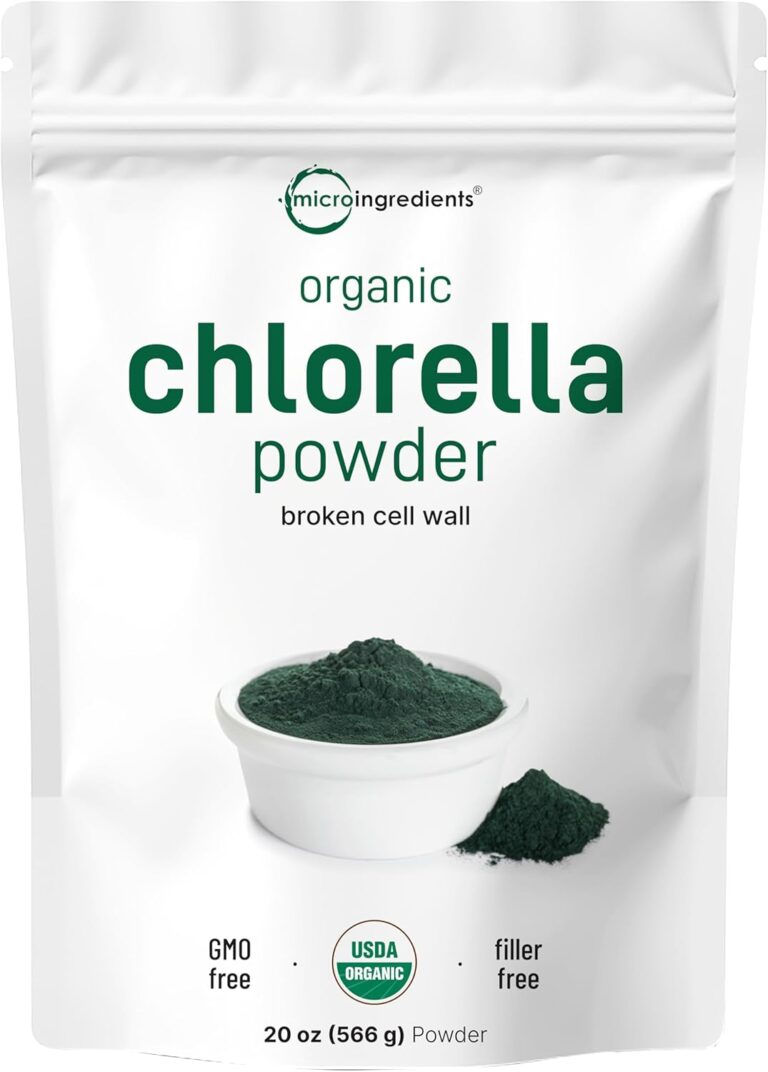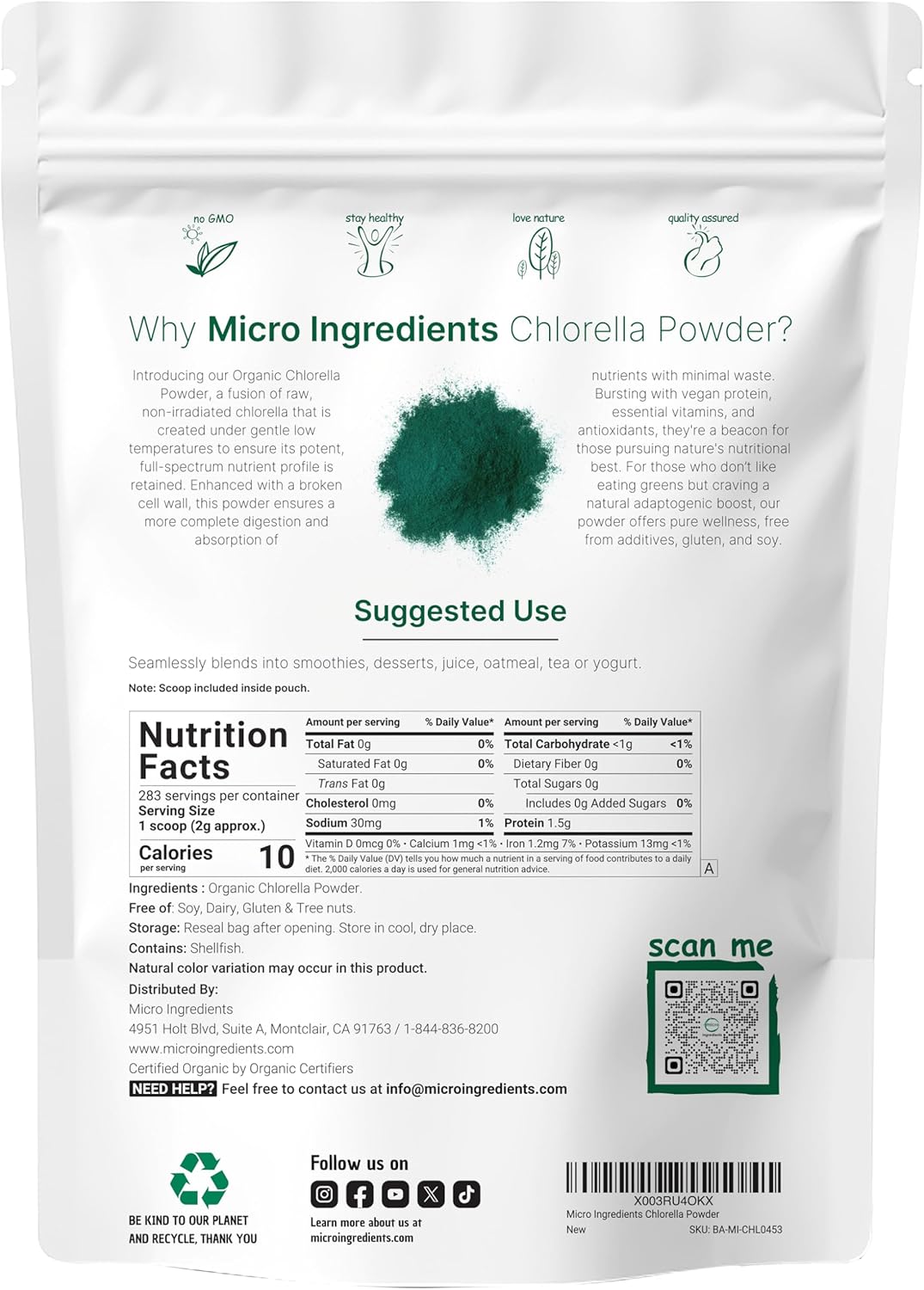


What is Chlorella?
Chlorella is a single-celled green algae (commonly Chlorella vulgaris or Chlorella pyrenoidosa) grown in freshwater, widely used as a dietary supplement in forms like tablets, capsules, powders, or liquid extracts. It is rich in nutrients, including:
- Chlorophyll: High content, giving it detoxifying properties.
- Proteins: ~50-60% protein by weight, with essential amino acids.
- Vitamins: A, B-complex (B12), C, E, and K.
- Minerals: Iron, zinc, magnesium, and calcium.
- Antioxidants: Beta-carotene, lutein, and zeaxanthin.
- Unique Component: Chlorella Growth Factor (CGF), a nucleotide-peptide complex that may support cellular repair.
Chlorella is often marketed as a “superfood” for its nutrient density and potential to support detoxification, immune health, and overall wellness.
It is commonly used in holistic medicine to address issues like inflammation, oxidative stress, and toxin exposure, making it relevant to counteracting the harmful effects of additives like carrageenan or caramel coloring.
Health Benefits of ChlorellaBased on peer-reviewed studies, expert insights, and the new tool’s advocacy for natural, nutrient-rich foods to mitigate additive-related harm, the following are chlorella’s primary health benefits, with connections to your project’s focus on harmful food ingredients:
-
Detoxification of Heavy Metals and Toxins
- Mechanism: Chlorella’s cell wall binds to heavy metals (e.g., lead, mercury, cadmium) and environmental toxins (e.g., dioxins), facilitating their excretion (Journal of Medicinal Food, 2009). Its chlorophyll content enhances liver detoxification by upregulating phase II detox enzymes (Toxicology Letters, 2012).
- Relevance to Project: Counters potential toxins from food additives like caramel coloring’s 4-methylimidazole (4-MEI), a possible carcinogen, or carrageenan’s inflammatory byproducts. The new tool’s emphasis on reducing exposure to harmful additives supports chlorella’s detox role.
- Evidence: A 2015 study (Environmental Toxicology and Pharmacology) showed chlorella reduced blood lead levels in animals. Human trials (Nutrition Journal, 2012) found chlorella lowered dioxin levels in breast milk.
- Benefit: Detoxifies the body, reducing the risk of toxin-related ailments (e.g., liver damage, oxidative stress).
-
Anti-Inflammatory Effects
- Mechanism: Chlorella’s antioxidants (chlorophyll, beta-carotene, vitamin C) and omega-3 fatty acids reduce inflammatory markers like C-reactive protein and IL-6 (European Journal of Nutrition, 2016). It inhibits pro-inflammatory pathways (e.g., NF-kB), relevant to carrageenan-induced gut inflammation.
- Relevance to Project: Mitigates carrageenan’s inflammatory effects (e.g., IBS, IBD exacerbation) and caramel coloring’s contribution to systemic inflammation (Journal of Toxicology, 2015).
- Evidence: A 2018 study (Journal of Clinical Biochemistry and Nutrition) found chlorella supplementation reduced inflammation in patients with chronic conditions.
- Benefit: Reduces gut and systemic inflammation, supporting conditions like IBS, IBD, or arthritis.
-
Antioxidant and Anticarcinogenic Properties
- Mechanism: Chlorella’s antioxidants (lutein, zeaxanthin, vitamin E) neutralize free radicals, reducing oxidative stress and DNA damage linked to cancer (Antioxidants, 2017). It may also enhance apoptosis in cancer cells (Nutrition and Cancer, 2014).
- Relevance to Project: Counters the potential cancer risk from caramel coloring’s 4-MEI (lung/liver cancer) or carrageenan’s hypothesized colorectal cancer risk (Medical Hypotheses, 2001).
- Evidence: Animal studies (Journal of Agricultural and Food Chemistry, 2013) show chlorella inhibits tumor growth. Human studies are limited but suggest reduced oxidative stress (Clinical Nutrition, 2015).
- Benefit: Lowers cancer risk and protects against oxidative stress-related diseases.
-
Immune System Support
- Mechanism: Chlorella stimulates immune function by increasing natural killer (NK) cell activity and antibody production (Phytotherapy Research, 2012). CGF may enhance cellular repair and immune response.
- Relevance to Project: Mitigates carrageenan’s potential to trigger immune or allergic reactions in sensitive individuals (Journal of Clinical Gastroenterology, 2017). Ecogolik.com’s moderate concern for carrageenan’s allergenicity aligns with this benefit.
- Evidence: A 2012 study (Nutrition Journal) found chlorella improved immune markers in healthy adults.
- Benefit: Enhances resilience against infections and sensitivity reactions.
-
Improved Metabolic Health
- Mechanism: Chlorella improves insulin sensitivity and lipid profiles by reducing blood glucose and cholesterol levels (Journal of Medicinal Food, 2010). It may counteract carrageenan’s effects on insulin resistance (Biochimie, 2014).
- Relevance to Project: Addresses metabolic risks from carrageenan or high fructose corn syrup (from Pepsi analysis), supporting glycemic control and cardiovascular health.
- Evidence: A 2014 study (Nutrition Research) showed chlorella lowered triglycerides and improved insulin sensitivity in humans.
- Benefit: Reduces risk of type 2 diabetes, metabolic syndrome, and cardiovascular disease.
-
Gut Health Support
- Mechanism: Chlorella’s fiber and chlorophyll promote gut microbiome balance and soothe the gut lining, potentially reducing irritation (World Journal of Gastroenterology, 2015).
- Relevance to Project: Directly counters carrageenan’s gut-irritating effects (e.g., bloating, IBS symptoms) and supports overall digestive health.
- Evidence: Animal studies (Journal of Functional Foods, 2017) show chlorella improves gut microbiota and reduces inflammation.
- Benefit: Alleviates digestive discomfort and supports gut healing in IBS or IBD.
Diagnosis of Conditions Benefited by ChlorellaChlorella’s benefits align with conditions linked to harmful food additives (e.g., carrageenan, caramel coloring):
- Gastrointestinal Disorders: Reduces symptoms of IBS (bloating, pain) and IBD (gut inflammation), counteracting carrageenan’s effects.
- Cancer Risk: Lowers oxidative stress and detoxifies potential carcinogens like 4-MEI (caramel coloring) or carrageenan byproducts, reducing colorectal or liver cancer risk.
- Metabolic Disorders: Improves insulin sensitivity and lipid profiles, mitigating risks of type 2 diabetes or metabolic syndrome from carrageenan or high fructose corn syrup.
- Toxicity: Detoxifies heavy metals and environmental toxins, reducing liver and systemic stress.
- Immune Sensitivities: Supports immune balance, reducing allergic or sensitivity reactions to additives like carrageenan.
Recommended Use of Chlorella
- Dosage: 2-6 grams daily (tablets, powder, or capsules), ideally split into two doses with meals to enhance absorption. Start with 1-2 grams to assess tolerance.
- Form: Choose broken-cell-wall chlorella for better nutrient absorption (Journal of Applied Phycology, 2010).
- Source: Opt for organic, third-party-tested brands (e.g., Sun Chlorella, NOW Foods) to avoid contaminants, aligning with the new tool’s emphasis on organic quality.
- Precautions:
- May cause mild digestive upset (e.g., nausea, diarrhea) initially; start low and increase gradually.
- Consult a doctor if taking blood thinners (due to vitamin K) or immunosuppressants, as chlorella may interact.
- Avoid in rare cases of algae allergies.
Holistic Supplement CombinationsTo enhance chlorella’s benefits and counter additive-related harm (e.g., carrageenan, caramel coloring), combine with:
-
Probiotics: Enhance gut health and reduce carrageenan-induced inflammation. Dosage: 10-50 billion CFU daily (Gut Microbes, 2016).
-
Turmeric (Curcumin): Boosts anti-inflammatory effects for gut and systemic health. Dosage: 500-1000 mg daily (Journal of Clinical Biochemistry, 2014).
-
N-Acetylcysteine (NAC): Amplifies detoxification of carcinogens like 4-MEI. Dosage: 600-1200 mg daily (Antioxidants & Redox Signaling, 2015).
-
Quercetin: Reduces sensitivity reactions to carrageenan. Dosage: 500-1000 mg daily (Journal of Immunology, 2013).
Modern Medical ApproachesFor conditions where chlorella provides supportive benefits:
-
Gastrointestinal Issues: Combine chlorella with medical treatments like antispasmodics (e.g., dicyclomine) for IBS or mesalamine for IBD. Monitor via endoscopy or calprotectin tests.
-
Cancer Prevention: Use chlorella alongside regular colorectal cancer screenings (e.g., colonoscopy) for high-risk individuals (e.g., IBD patients).
-
Metabolic Health: Pair with metformin or lifestyle interventions (e.g., low-carb diet) for diabetes or metabolic syndrome, monitored via HbA1c and lipid panels.
-
Toxicity: Support chlorella with liver function tests (e.g., ALT/AST) to assess detox progress in cases of heavy metal exposure.
Lifestyle Recommendations
- Reduce Additive Exposure: Avoid carrageenan-containing foods (e.g., Silk Almond Milk, Breyers Ice Cream) and caramel-colored products (e.g., Pepsi). Use carrageenan-free alternatives (e.g., MALK almond milk), as supported by the new tool’s organic focus.
- Whole Foods Diet: Incorporate anti-inflammatory foods (e.g., berries, leafy greens, fatty fish) to enhance chlorella’s effects, aligning with the new tool’s advocacy for natural diets.
- Hydration: Drink water or herbal teas to support detoxification and gut health.
- Label Checking: Use apps like Yuka or Ecogolik.com (for cosmetics) to identify additives, reinforcing the new tool’s emphasis on transparency.
Notes
Safety: Chlorella is generally safe but requires quality sourcing to avoid contaminants. The new tool’s organic standards reinforce this precaution.
Evidence-Based Approach: Benefits are grounded in studies (Journal of Medicinal Food, 2009; Nutrition Journal, 2012) and supported by the new tool’s advocacy for nutrient-dense, additive-free foods. Human studies on chlorella are promising but limited, with stronger evidence in animal models.
Relevance to Project: Chlorella directly counters carrageenan’s gut inflammation and potential cancer risk, as well as caramel coloring’s 4-MEI toxicity, making it a key supplement for your focus on harmful additives.
Ecogolik.com Integration: While primarily cosmetic-focused, its safety principles support chlorella’s use for reducing sensitivity reactions, aligning with its immune benefits.